


WAS FOUNDED IN 1855
WAS FOUNDED IN 1855
08853, Obukhiv district, Myronivka united territorial community,
Tsentralne village, 30 Tsentralna str., tel. (04574) 7 41 97
 |
Facebook page of the station: facebook.com/asmyronivka |

The history of the Myronivka agrometeorological station
Myronivka Agrometeorological Station is located in the southeast of Myronivka district near the picturesque village of Tsentralne, which is geographically located in the watershed of the Dnipro, Ros, and Rosava rivers.
In May 1913, sugar producers established the meteorological department of the Central Experimental Breeding Station in Myronivka.
From the archival records kept at the Myronivka V.M. Remeslo Wheat Institute: “The main activity on meteorological issues was taken over by Oleksii Konstantinovych Filipovskyi. An observation house was set up in the park near the station for observations. The supervision was carried out by Yovenko. On May 1, 1913, constant observations began. “ From the book “Varietal Stations of the Sugar Trust” (1922-1923, pp. 44-65):
“In addition to purely research work, meteorological work is also carried out. There is a meteorological installation that draws conclusions about the climatic characteristics of this point. The station was equipped with recorders.”
All meteorological observations at that time were conducted on a four-line cycle. To improve the observations, recorders were used, devices that recorded (on special tapes) the temperature and humidity around the clock, and they were installed in a meteorological booth at the meteorological site. A rain gauge was also installed here, which measured the amount of precipitation twice a day. There was also a pressure recorder that stood in a room on the third floor of the chemical laboratory, where the meteorological department was located.
(see photo of the Chemical Laboratory and the Meteorological Department).
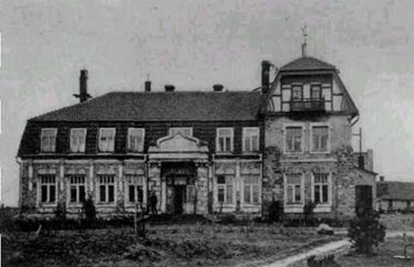 |
| Chemical Laboratory and Meteorological Department |
A weather vane was installed on the roof of the same building to monitor the wind direction and speed.
“Since 1913, meteorological observations have been carried out, which made it possible to characterize the climatic conditions of the Myronivka Experimental Breeding Station and compare them with those of other beet-producing areas from Podolia to the eastern part of the Voronezh province.”
In 1921, based on the observations of the meteorological department of the Central Experimental Breeding Station in Myronivka, the Myronivka meteorological station was established, which remained a subordinate breeding station but was already part of the Hydrometeorological Service network. It is unknown who was the head of the station from 1921 to 1930. From 1930 to 1941, the station was headed by a specialist in agricultural meteorology, senior researcher Malish M.V., and the worker was Zahika O.M. (photo of the meteorological site with the supervisor).
The meteorological station was of the 2nd category of the 1st class. In this status, meteorological observations continued until the beginning of World War II.
After the war, the work of the meteorological station resumed, although, according to eyewitnesses, meteorological observations were carried out during the occupation regime, but, unfortunately, the observation materials have not been preserved.
In 1944, after the territory of the breeding station was liberated from the Nazis, a new revival of the meteorological station began under the leadership of Tiutiunnyk (she was a woman, but her name and patronymic are unknown), who worked for a very short time. In January 1945, I.S. Zakharov became the head of the station. The station is gradually revived - new instruments and observations are introduced. The range of crop observations was expanded. In 1946, the station was granted the status of agrometeorological. Since then, the station has been fully transferred to the Hydrometeorological Service, but close ties with the breeding station have not ceased. Joint scientific work is underway. The management of the breeding station provides assistance in solving production issues. But in April 1947, the head of the station was changed - the station was headed by S. Sukailo. The question of the station's development arose - allocation of land for a meteorological site and construction of the station's premises. New positions are introduced: senior agrometeorologist and agrometeorologist. The scientific and thematic work is expanded.
In 1948, on the outskirts of the experimental breeding station in Myronivka village, a plot of land (1.0 hectares) was officially allocated for the construction of an agrometeorological station. On August 24, the weather station was moved from the park to the field.
In May 1949, the Myronivka Agrometeorological Station was renamed the Starchenko Agrometeorological Station (and it was called that way until 1980, when it was called the Myronivka Agrometeorological Station) and in September Tatarinov was appointed to the position of head. The basic principle of agrometeorological observations is to conduct observations of the state and change of agrometeorological factors in parallel in time and space, as well as changes in the development, growth and condition of crops and in the formation of elements of their productivity and final products.
In March 1954, after A.Y. Friedrich, Director of the Breeding Experimental Station, and T.K. Bohatyr, Head of the Hydrometeorological Service, N.M. Khidko was appointed Head of the Station, and she worked fruitfully until her retirement in 1970. Under her leadership, together with scientists of the research station, scientific work was carried out to determine the critical freezing temperatures of winter crops. The range of meteorological and agrometeorological observations was significantly expanded and actinometric observations (sun observations) were introduced. On January 1, 1966, all meteorological observations were switched to eight-day observations. Many pages of the station are associated with the name of Nadiia Mykolaivna, a person of outstanding organizational skills and a good hostess. She was responsible for the entire construction of a residential building for the staff, working and utility rooms, which were built in 1955-1956. The construction was carried out at the expense of the state hydrometeorological service and with the considerable assistance of the breeding station. (photo - new weather station and premises, 1968)
The staff of the station, under the leadership of the chief, beautifully cultivated the territory of the station, planted ornamental and fruit trees that still delight people today. Nadiia Mykolaivna is a wise, kind mentor who has trained many generations of agrometeorologists. Even after retirement, she returned to work from time to time to provide all the help she could. She managed to make the station the best not only in the Kyiv region, but also in Ukraine and the former USSR.
From 1970 to 1973, Anatolii Sukhovetskyi worked as the head of the station, and from 1973 to 1974, Zoya Shapovalova worked as the head of the station.
During these years, a large-scale development of the Myronivka Research Institute of Agricultural Sciences took place. The agrometeorological station was not neglected. The second stage of the revival of the agrometeorological station began in October 1974, when Maria Mykolaivna Koshchavka took over the management of the station. This energetic, creative, wise woman was the head of the station for 9 years and had a considerable amount of work on her shoulders, which she managed very well. During this time, the station's premises were rebuilt and completed, central heating was installed, and plumbing equipment was installed in the premises. New modern instruments and equipment were installed at the station. A device for measuring the lower boundary of clouds and an anemorumbometer were installed, replacing the weather vane. These devices have greatly facilitated meteorological observations and improved their quality. Radiometric observations of the natural radiation background were introduced and are still carried out regularly. So, when the Chornobyl accident happened on April 26, the station was the first in the area to record high radiation levels. Mariia Mykolaivna created the Agrometeorological Bulletin of Long-term Data for the Myronivskyi District, which has been indispensable in the work for a long time. The station became a solid base for internships for university and college students from all over the USSR. Maria Mykolayivna's work was highly appreciated by the leadership of the Hydrometeorological Service. Every year, the station's staff was awarded diplomas of the USSR and USSR Hydrometeorological Service.

The team has been repeatedly awarded diplomas of the State Hydrometeorological Service, the Borys Sreznevsky Central Geophysical Observatory for its diligent work and has repeatedly won the honorary title of the best station in Kyiv region. I would like to say a kind word to the veterans of the meteorological service, M.Y. Ostapenko, L.V. Dubrova, and L.M. Kovalska, who have worked all their adult lives at the agrometeorological station and made a significant contribution to its development, and are now on a well-deserved rest. A kind word should be said about the unfortunately deceased Vira Demydivna Novitska, who worked as a meteorological technician from 1972 to 2008.
Currently, the Myronivka Agrometeorological Station conducts meteorological observations of visibility, cloud cover, atmospheric phenomena, air and soil temperature, humidity, and atmospheric pressure. In winter, observations are made of ice and frost phenomena and snow cover. Agrometeorological observations of crops are carried out for crops sown in the fields of the Myronivka Wheat Institute named after V.M. Remeslo, SE DG “ELITA” and PJSC SPF “UROZHAY” in Myronivka. Myronivka.
The station has been storing and replenishing stock material since 1945, on the basis of which the station's agrometeorologists make excellent agrometeorological forecasts: reserves of productive moisture in the soil at the beginning of the growing season, flowering of fruit trees, flowering of grasses, timing of buckwheat sowing, agrometeorological conditions for the development of crops. Such forecasts help agricultural producers sow, harvest and preserve crops on time.
Today's work is impossible to imagine without computer technology. The first PC at the station appeared in 1999. Now the station has a barometer - BAR (electronic pressure gauge), and the ARM METEO program has been implemented, which provides online transmission of meteorological information. Electronic versions of TSG-1, TSG-6, TM-9 and complex meteorological data charts have been created and are successfully used.
The station cooperates with scientists of the Myronivka V.M. Remeslo Wheat Institute, district and local authorities, agricultural producers in providing agrometeorological information and warnings about natural hazards. The head of the station is a member of the district commission on industrial safety and emergencies. The service area of the Myronivka Agrometeorological Station includes not only Myronivka district, but also Kaharlyk, Bohuslav, Tarashchanka, and Rokytnyansky districts.
The tireless work of the station's employees (at all stages of history) and their fruitful work has been repeatedly recognized with diplomas and awards not only in Kyiv region, Ukraine, but also in other countries. The station is part of the international observation system. The meteorological observations of the Myronivka Agrometeorological Station are used by weather forecasters in America and Europe to make weather forecasts. They highly appreciate the quality of observations. All the heads of the Myronivka agrometeorological station made a significant contribution to the achievement of high performance. Each of them was experienced, responsible, and purposeful.
Today, I would like to express my gratitude and bow low to people of all generations whose work over the centuries has created a solid foundation for further improvement of work and working conditions.

tel. (044) 233 61 57
| |
Facebook page of the station: facebook.com/GydroKyiv |
 In 1912, the Hydrometric Unit was organized at the Waterways Department of the Ministry of Railways. And in 1913, the hydrometric unit was organized in the Land Management Department of the Main Directorate of Agriculture and Land Management. At that time, the hydrological station had different subordination: the Department of Railways, the Hydrometric Department, and the Hydrometric District, but the main governing body was the technical section. In the late thirties, to ensure that hydrological research work was carried out on the ground, hydrological observatories were established on the basis of first-class hydrological stations in Kyiv, Alma-Ata, and Khabarovsk.
After the war, the Kyiv Hydrological Station was re-established in the old building of the Ukrainian Hydrometeorological Service of the USSR at 21 Volodymyrska Street, occupying a corner of the Geophysical Observatory. In 1953, the station staff was transferred to Zolotovoritska Street, to the building of the USSR Hydrometeorological Service, to the basement near the archive.
On December 27, 1949, permission No. 3060 was obtained from the Kyiv City Executive Committee to allocate a plot of land for construction on Hydropark Island. Architect V. Barzylevych developed an exciting project of a three-story office building. The total construction area was supposed to be 650 m2, but the final land allotment was approved on July 9, 1957, by the Kyiv City Council on July 9, 1957, No. 1129. In the same year, construction began and lasted until 1959, when the main building was virtually completed, except for the heating system and some minor repairs. A little later, the building was put into operation and brought to completion thanks to the persistent efforts of the station manager, I.I. Okunev.
In the postwar years, the station was managed by S.D. Nyhrei, H.I. Sviridenko, I.I. Okuniev and M.D. Dymskyi.
For a long time, from 1967 to 1984, the station was headed by a well-known hydrologist and a deeply decent person - Arseniy Kalenikovych Melnyk, who started his career at the Kyiv GS in 1946 and finished in 1996.
The station became the basic one in Ukraine for hydrological research, implementation of scientific developments, and a forge of professional staff.
Many students from different countries and nations did their internships at this station, where they significantly expanded their knowledge and skills.
For many, it was a launching pad for their future careers. Particularly noteworthy are N. Gladkov, L. Doroshenko, V. Kozhemiakin, V. Leonenko, V. Lipinsky, N. Sakevych, N. Stetsenko, O. Skoropad, E. Shulipenko, and many others who made a great contribution to the development of the station and continue to keep in touch with it.
In March 1984, the station was headed by Oleg Serebryakov, and in 1985 the station was recognized as the best in the USSR Hydrometeorological Service and awarded a transitional honorary pennant.
In 1986-1991, the Kyiv station was headed by A. Akhrameyev, A. Grabchak and O. Miroshnychenko. In the first days after the Chornobyl accident, many employees took part in the liquidation of its consequences. A part of the expedition of the NPO "Typhoon" from Obninsk was temporarily accommodated in the premises of the Kyiv GS.
In August 1991, O.V. Serebryakov returned to the position of the head.
In 2018-2022 the station was headed by Stanislav Leonidovych Kiptenko. From June 2022 to the present, Ihor Borysovych Giriy has been in charge since then.
Currently, there are 49 employees, including 29 observers. The station consists of 2 sectors - river and lake.
The main tasks of the station are organizational and methodological management of the adjacent network, study of the hydrometeorological regime of water bodies in the Upper and Middle Dnipro basin; processing and systematic analysis of observation results; preparation of WQS materials and water balances; sampling of surface water for hydrochemical and hydrobiological indicators; systematic monitoring of air pollution.
For the past 110 years, the station has lived with the country. The Civil War - three employees went to the front, 10 people went to the Great Patriotic War, two heads Kamarnitsky S.K. and Marchynsky I.F. suffered in the repressions of the 30s, during the Holodomor, hydrometeorological observers were rescued in the villages.
They built developed socialism and fought against cosmopolitanism. 3 employees of the station served and worked in Afghanistan, 7 employees took part in the liquidation of the Chernobyl accident, 4 people conducted research in Antarctica, and 3 employees are now defending Ukraine from the Russian invader.
The staff of the station works steadily and is staffed by qualified specialists. A number of the station's employees have been working here for decades: V.A. Akhrameev, G.V. Nedohibchenko, O.D. Prykhodko, I.S. Serebryakova and D.O. Serebryakov). Some hydrological posts are run by family dynasties with more than 50 years of experience: Mostyshche gauging station (GC) on the Irpin River - Yurchenko family; Ukrainka GC on the Irsha River - Matskevych family; Pischane GC on the Supiy River - Shupan family; Zdorovka GC on the Stuhna River - Bortnytskyi family.

03028 м. Kyiv-28, 39 Prospect Nauky, building 2, tel. (044) 525 89 73
|
Facebook page of the station: facebook.com/OGMSKyiv |
The United Hydrometeorological Station is located in Kyiv on Nauky Avenue. The station conducts two areas of observation: aerological and meteorological.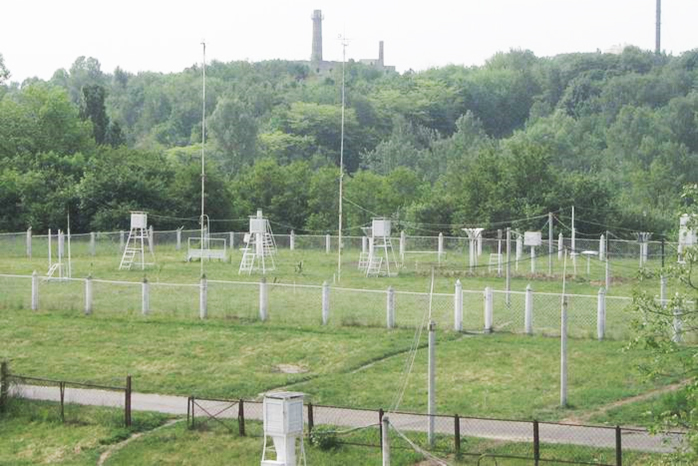
Aerological observations or temperature and wind sounding of the atmosphere are measurements of meteorological elements: temperature, humidity, pressure, wind direction and speed at different altitudes in the free atmosphere. The sounding is carried out by radiosondes. A ground-based radar station is a mandatory part of the observations.
The beginning of aerological observations dates back to the 30s of the last century.
In June 1941, due to military operations, aerological observations were suspended.
In 1944, aerological observations were resumed and conducted at 14 Tolstoho Street. And since 1947, on Bagrynova Hora, since 1950 at the Civilian Aerometeorological Station (AMSC) - Zhulyany, since 1952 at the Kyiv Aerological Station on Velyka Kytaiivska Street (now Nauky Avenue).
Observations were carried out in 1935 using a short-wave radio receiver of the KUB-4 type and a radiosonde R-1082. Since 1947, with the SON-2 radar station and the Molchanov RZ-49 comb radiosonde. In August 1958, the SON-2 station was replaced by the Malachite radiotheodolite with the A-22 radiosonde.
In January 1964, actinometric observations were carried out at the station. They were carried out on Wednesdays and Fridays at 23 hours of Moscow time by the Meteor radar station and the ARZ radiosonde.
Since May 1965, temperature and wind observations were carried out using the Meteor radar station and the A-60 radiosonde.
In June 1970, the Meteor station was replaced by the Meteorite station and the RKZ-1a radiosonde.
In June 1977, Meteorit-2 was installed together with the RKZ-5 radiosonde and the OKA-3 rangefinder, which allowed automating the processing of aerological information. Since April 1984, the processing of aerological information with the help of OKA-3 was canceled due to the introduction of a new radiosonde MARZ-2-2.
In December 1987, the station introduced the AOK-1 sounding system (Titan-MRZ), designed for temperature and wind radio sounding with automatic data processing.
Until 1996, the station was sounded with Russian-made radiosondes (Sverdlovsk, now Yekaterinburg).
Since 1996, the Lviv enterprise "Tekhprylad" has started production of domestic radiosondes PAZA.
Since 01.08.2018, sounding has been carried out by the radiotheodolite UL-PAZA12, manufactured by Lviv Enterprise "Tekhprylad".
The sounding from 01.05.2021 is again carried out 2 times a day.
(from 04.03.2020 to 30.04.2021 - one-time)
The first head and founder of the Aerological Service of Ukraine was Tymofii Kyrylovych Bohatyr.
From 1947 to 1958 - Hryhorii Shestakov.
From 1958 to 1972 - Mykhailo Galchenko.
From 1972 to 1975 - Viktor Andrienko.
From 1975 to 1977 - Leonid Mohyla.
From 1977 to 1980 - Mykola Kolisnyk.
From 1980 to 1987 - Oleksandr Volkhanovych.
From 1988 to 2001 - Tamara Tarasova.
From 2002 to 2022 - Nadiia Gapichenko
Since 2022 Larisa Zhuravel has been the head of the station.
Meteorological observations are measurements of meteorological elements and their fluctuations, as well as assessments of the quality of atmospheric phenomena.
Regular meteorological observations began in Kyiv in May 1855 with the organization of the meteorological observatory at St. Volodymyr's University and were conducted four times a day. Observations were made on the state of the air, temperature, humidity, wind strength and direction, clouds, precipitation, minimum temperature at night and maximum temperature during the day.
The thermometers were initially installed near a window on the second floor of the observatory building at a height of 6.7 m above the ground, and a rain gauge without wind protection in the observatory yard. The maximum and minimum temperatures were determined by a thermometer, and the wind direction was determined by a weather vane installed on the roof of the observatory building, in 1875 at a height of 12 m above the ground, and since 1882 at a height of 14 m.
The station was interrupted only during the Second World War (from August to November 1943).
The first director of the observatory was E.O. Knorr, as the observatory belonged to the university's physics department from its foundation until 1925.
After the war, the station (of the 17th type) was located in the same place, but was merged with the hydrological station.
Organizationally, the station was divided into a hydrological station of the 16th type and a meteorological station of the 10th type on September 13, 1950. The head of the meteorological station until 1954 was T.O. Ryabchenko, and from 1955 to 1969 - I.B. Voskoboinyk.
In 1956, the station became part of the meteorology department of the restored observatory. I.B. Voskoboinyk remained the head of the meteorology group until 1969.
From 1969 to 1984 the meteorological group was headed by L.I. Denysovych.
In 1981, the meteorological station was moved to the southern outskirts of Kyiv and located in the building of the aerological station at 37 Nauky Avenue.
In 1983, the meteorological group became part of the aerological station and was named the United Hydrometeorological Station (UHMS Kyiv).
From 1984 to 1988, V.S. Koloda was a senior meteorological technician, from 1988 to 1995 - L.M. Pasichna, from 1996 to 2003 - V.V. Pasko, in 2004 - O.O. Ukrainets, from 01.04.2005 - Larysa Zhuravel.
The Kyiv Observatory is included in the list of reference climatic stations. Observations are carried out eight times a day. The station carries out both basic meteorological observations and additional radiometric observations (for gamma background, radioactivity of precipitation by tablet, radioactive air pollution by filter-ventilation unit), and precipitation chemistry.
New instruments were introduced at the station: MARK-60 anemorumbometer, BAR atmospheric pressure gauge, automated precipitation gauge VOA-1M, electronic temperature and humidity converter HMIP-45D, electronic bare area temperature sensors and electronic depth thermometers. 01.11.2011 the ARM-METEO program was installed, 28.11.2011 the FTP program for data transmission to the Ukrainian Hydrometeorological Center.
The station staff consists of 17 people (6 meteorologists, 10 aerologists).
In 2005, the station was awarded the WMO (World Meteorological Organization) Certificate of Appreciation and the Hydrometeorological Service of Ukraine Certificate of Honor for high performance in fulfilling the sounding plan (according to the plan, 25% of all probes of the Hydrometeorological Service of Ukraine were to be launched, but in fact 28% were launched).
The Sectoral State Archive of Hydrometeorological Observations has been storing aerological observations since 1945 and meteorological observations since 1866.

142, Hlybotska St., Boryspil, Boryspil district, 08300, tel. (04595) 6 65 05
| |
Facebook page of the station: facebook.com/msboryspil |

The Boryspil Meteorological Station of the second category was organized in 1909 at the agricultural school and operated without interruption until September 1941. From 1931 to 1941, the station operated under the first category program - a geophysical observatory with aerological and actinometric observations was transferred here from Kyiv. All other years, the station operated under the category II program.
In May 1942, the German occupiers opened a second-class meteorological station on the territory of the Serp ta Molot collective farm, located 1.5 km west of the former observatory.
In September 1943, during the liberation of Boryspil and the retreat of German troops, the meteorological station's archive and its premises were burned and the instruments taken away. Only a weather vane, a rain gauge, a nephoscope, and a psychrometric booth survived.
The same year, on November 1, the work of the meteorological station was resumed under the second category program by an inspector of the Kharkiv Military District Hydrometeorological Service Department at the same location - on the territory of the Serp ta Molot collective farm. A room was rented for the office space. Until 15.06.1944, observations were carried out using portable instruments. In January 1944, observations of snow cover in the field and on the bare ground began. In April 1951, the weather station was moved to Kotovskoho Street, now 142 Hlybotska Street, where it is located today.
 The station carries out round-the-clock observations of the following meteorological elements: air temperature and humidity, soil surface temperature and at depth, atmospheric pressure, wind direction and speed, precipitation, atmospheric phenomena, including dangerous and natural hydrometeorological phenomena, and the duration of sunlight per day. In winter, the snow cover is monitored both at the meteorological site and on the field route, soil freezing and soil temperature at the level of the tillering node, i.e. 3 cm, are measured.
Since 1958, actinometric observations of solar radiation fluxes have also been carried out. From April 1969 to April 2014, ozonometric observations of the total ozone content in the atmosphere were carried out. In addition, the station conducts radiometric observations of the gamma background.
Agrometeorological observations have been carried out at the station since 1944 under a reduced program (without the position of agrometeorologist), and since 1952 the position of agrometeorological technician was introduced and observations were carried out under the full program. Observations were made on the development of major crops and the impact of weather conditions on them. Based on these observations, forecasts of productive soil moisture reserves at the beginning of the growing season were made, as well as forecasts of grain crops ripening, fruit trees flowering, etc. Unfortunately, these observations stopped in 1997.Boryspil weather station is equipped with the automated program “Meteo” and the necessary electrical sensors: BAR atmospheric pressure meter, MARK-60 wind speed and direction meter, HMP45D temperature and relative humidity converter, TSP 1-8 100P resistance thermocouples on the bare ground (6 pcs.) for measuring soil temperature at depths of 5-20 cm, extractable electrical sensors under natural cover (5 pcs.) for measuring soil temperature at depths of 0.2-3.6 m. The site is also equipped with meteorological instruments that do not require power supply to ensure round-the-clock uninterrupted monitoring in the conditions of stabilization power outages.
On December 5, 2007, an automatic meteorological complex “Troposphere-1” was installed, which includes meters of atmospheric pressure, temperature and humidity, wind direction and speed. The battery included in the Troposphere-1 kit allows the data to be used for up to two hours after the power is turned off.
Meteorologists observe all meteorological variables and the level of radioactive background 8 times a day; actinometric observations are made 6 times a day; and observations of atmospheric phenomena and sunlight duration are conducted around the clock.
The meteorological observations are promptly transmitted to the Ukrainian Hydrometeorological Center for use in making meteorological forecasts.
The Boryspil weather station provides meteorological information to local authorities and DTEK's regional office upon request. Residents of Boryspil district can also request a meteorological certificate to obtain insurance, resolve utility issues, etc. Agreements have been concluded with Boryspilteplomerezha, Boryspilvodokanal, and Nibulon.
Students from local lyceums and schools visit Boryspil to familiarize themselves with the work of the weather station and expand their knowledge of natural history.
The first head of the station since 1943, who had to resume its work (November 1943-August 1949), was O. Koshelap. In 1949, he was replaced by Hanna Vakulenko, who worked until August 1952. Then the meteorological station was headed by:From 01.08.1952 to 31.12.1966 - Oleksii Ivanovych Biletskyi
From 01.01.1967 to 30.06.1967 - Zinaida Pavlovna Reiter
From 01.07.1967 to 01.10.1968 - Alla Shapko
From 02.10.1968 to 15.03.1979 - Mykola Ivanovych Shapoval
On 16.03.1979, Mykola Ishchenko, who devoted 44 years of his life to this work, was transferred from Myronivka Meteorological Station to the position of the Head of Boryspil Meteorological Station. During his career, M.O. Ishchenko twice resigned from the position of the station head to gain new experience at the Novolazarevskaya Arctic Research Station in 1989-1991 and at the Mirny Arctic Research Station in 1992-1995. During his absence, the station was managed by Oleksii Ivanovych Biletskyi and Liubov Mykolaivna Ishchenko. Also, M.O. Ishchenko worked at the Chornobyl weather station on a shift basis for two years in 1986-1988, and during his absence, the duties of the station's head were performed by senior meteorologist L.M. Ishchenko.
In September 2023, Mykola Ishchenko retired and Olena Malashova took over the duties of the station head.


11, Ivan Mazepa Avenue, Vyshhorod, Vyshhorod district, 07300, tel. (04596) 5 42 49
|
Facebook page of the station: facebook.com/msvyshgorod |

Meteorological observations in Vyshhorod began in January 1971 on the territory of the Kyiv Dam. The meteorology group was part of the Kyiv HPP lake station, which was renamed Vyshgorod lake station in 1981.
Since January 1999, the lake station was reorganized into a second-class meteorological station and subordinated to the Central Hydrometeorological Office. Since July 2014, the Vyshgorod meteorological station has been reorganized into the United Hydrometeorological Station Vyshgorod. Meteorological observations at the station were always carried out according to the program of the station of the second category. Eight times a day, observations are carried out for temperature and humidity, atmospheric pressure, soil temperature, wind direction and speed, clouds, precipitation, and visibility. In winter, the height and nature of the snow cover. Observations of atmospheric phenomena are carried out around the clock.
From 1974 to 1977, the intensity of liquid precipitation was monitored using a pluviograph, and from 1974 to 1979 - evaporation from the water surface. Since 1986, radiometric observations have been carried out, the program of which includes the measurement of the radiation background at 9 o'clock in the morning.
The meteorological station sends synoptic telegrams to Kyiv Pogoda and Svitlovodsk Pogoda every 3 hours, and sends a telegram about the radiation background every day. Every ten days it sends an agrometeorological telegram.
Storm telegrams are sent to Kyiv Pogoda and Svitlovodsk Pogoda.
The station provides hydrometeorological information to the Kyiv HPP, the District State Administration, the District Council, and the Utility Plant.
Heads of the station:
1971 - November 1974 - Petro Shendryk
December 1974 - 1975 - Leonid Kharitonovich Kashuba
1976 - October 1979 - Volodymyr Hryhorovych Dudarenko
November 1979 - February 1981 - Valerii Derevets
March 1981 - June 1986 - Volodymyr Hryhorovych Dudarenko
July 1986 - January 1999 - Kurylko Vilzhor Ivanovych
February 1999 - June 2014 - Svitlana Tyagunova
from 01.07.2014 till now - Larisa Karpenko

84b Lisna St., Piskivka village, Bucha district, 07820
| |
Facebook page of the station: facebook.com/msteteriv |
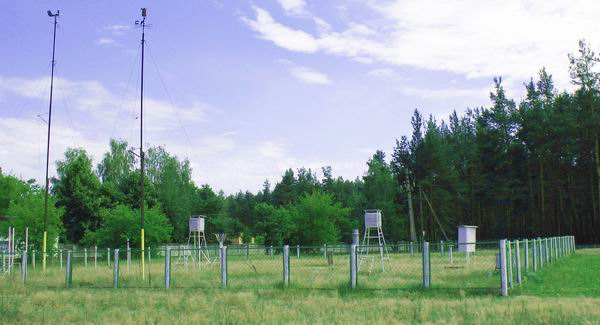
79 Parkova St., Baryshivka, Baryshivka district, 075050, tel. (04576) 5 35 84
| |
Facebook page of the station: facebook.com/ogmsbaryshivka |
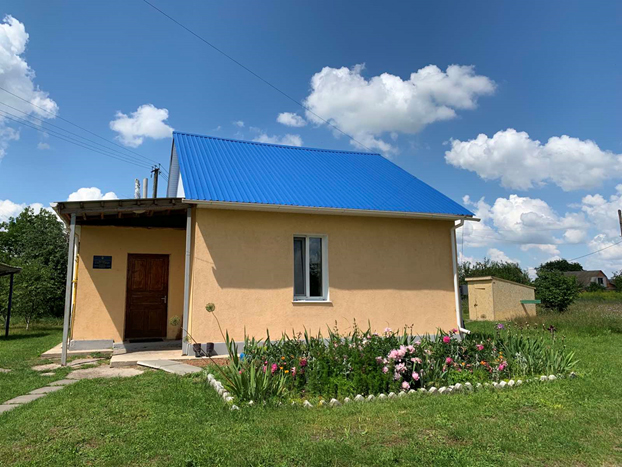 Baryshivka meteorological station was founded on December 1, 1958. Initially, the station was opened as a runoff station, then renamed and reorganized into a marsh station (the only one in Ukraine) with specific tasks in meteorology, hydrology, agrometeorology, and since 1992, due to the closure of a number of posts and a slight change in planned work, it has been operating as a unified hydrometeorological station.
At the beginning of the station's operation, the team was faced with big tasks: ensuring regular meteorological observations at two meteorological sites - on land and on the floodplain - hydrological study of the Trubizh River and its tributaries, agrometeorological features of growing crops on rainfed and floodplain (drained) lands, and providing agricultural organizations with observation data.
The station carried out extensive scientific work. It has been repeatedly awarded diplomas and certificates for quality work, as well as for rationalization and invention in the field of improving hydrometeorological instruments. Thanks to the station's materials, former employees Volodymyr Lytvyn and Ivan Zapolsky defended their PhD theses. For many years, our station was supervised by the State Hydrological Institute (Leningrad), represented by Doctor of Technical Sciences Romanov V.V. (hydrophysics of marshes). The team received tasks to perform various thematic works and test new instruments. 30 yearbooks were published under the title "Materials of Observations of the Marsh Station", scientific articles and monographs were published. As the station participated in the International Hydrological Decade under the UNESCO program, synchronous microclimatic observations were conducted here for 10 years. The data from these observations were used to identify frost zones and to specify the timing of sowing crops on the floodplain. Maps of frost zones were issued to all farms in the area.
The station also served as a support base for internships and practical training for students from Kyiv, Kharkiv, Odesa, Rostov-on-Don, and Kherson.
The meteorologists do their job in good faith around the clock and every three hours they monitor air temperature and humidity, wind speed and direction, soil temperature, ice and frost deposits, precipitation, air pressure, etc. and transmit weather telegrams to the Ukrainian Hydrometeorological Center. They monitor natural phenomena and issue storm warnings.
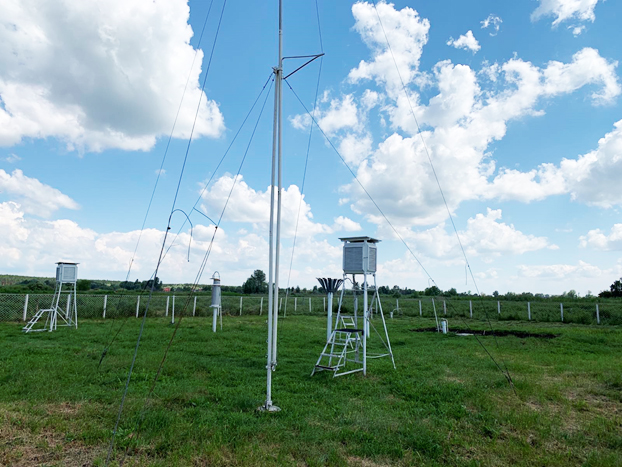
The Baryshivka meteorological station provides data from its observations to various organizations, including the district state administration and law enforcement agencies. We have signed contracts with Baryshivka Heating Network, Pereyaslav Heating Network, and Bella Center.
Schoolchildren visit the meteorological station with excursions, which helps them expand their knowledge of geography and natural history.
The first head of the station (1958-1973) was Volodymyr Lytvyn. His work was recognized by a government award. Then the station was headed by:
02.03.1974-31.01.1975 - Valentyn Bilous
22.01.1975-19.11.1975 - Volodymyr Hryhorovych Dudarenko
19.11.1975-30.05.1977 - Viktor Ivanovych Kulinich
30.05.1977- 22.08.1981 - Oleksandr Kosovets
22.08.1981- 01.10.1984 - Doroshenko Oleksandr Ananiovych
01.10.1984- 10.12.1994 - Borys Fedorenko
Since 1994, the station has been headed by Tatyana Mikhailovna Fedorenko.
 9, Kiltseva St., Fastiv, Fastiv district, 08500, tel. (04565) 6 40 33
|
Facebook page of the station: facebook.com/msfastiv |
On the southeastern outskirts of the city of Fastiv, at 9 Kiltseva Street, there is the Fastiv meteorological station, which celebrated its 90th anniversary on May 5, 2018.
The station was organized by the Southwestern Railway Administration under the name "Wind and rain gauge station Fastiv-Vokzal". On 21.11.1928, by the Order of the Ukrainian Hydrometeorological Service, Fastiv-Vokzal station was included in the state register of the UMGS. Until 1930, the station was under the jurisdiction of the Road Service, and the work was carried out by part-time railway telegraph operators. In 1928, the station had only a weather vane and a precipitation gauge and was staffed by 1 employee. In 1930, the station was transferred to the jurisdiction of the Hydrometeorological Service. Until 1947, the station's office and meteorological site were located next to the building of the office of the track service distance, and the apartment of the first station chief Andreev was also there, at which time 5 observers already worked at the station. 
At the beginning of the war in 1941, the station continued its work and stopped it only in connection with the approach of hostilities 2 days before the occupation of Fastiv by the Germans on 20.07.1941. During the occupation, the station resumed its work on 13.08.41 and conducted only climatic observations. In connection with military operations during the passage of the front, the station again stopped its work on 06.11.43, resuming it only after the liberation of Fastiv. Observations were made using portable instruments 9 km from the city on the Vyshniaky farm near the Sorochy Brid railway station. On January 1, 1944, the station resumed its work at the old location with stationary instruments. However, observations were carried out in dangerous conditions due to frequent raids by German aircraft. On April 9, 1944, at night at 2:30 a.m., as a result of a massive raid and bombing of the railway junction, the meteorological office and the meteorological site were completely destroyed, so observations were resumed using portable instruments.
On April 25, 1944, the station was resumed using stationary instruments in the city center, 0.6 km from the previous location. A new meteorological site was arranged, and the office was rented from the homeowner Barymsky at 16 Radyanska Street. However, on July 20, 1946, in peacetime, by order of the local authorities, the meteorological site was destroyed for the construction of the stadium, and observations were again carried out using portable devices for some time.
Since October 1, 1946, the meteorological site has been located at its current location on Kiltseva Street, and the office was originally located in a room of a 2-storey building next to the current building of the station. Only in 1959, under the leadership of Stepan Dutkivsky, the current station building and landscaping were built. S.Y. Dutkivskyi, who worked as the head of the Fastiv weather station for 36 years from September 1941 to September 1977, can rightfully be called the founder of the current station.
Since 1977, the head of the station has been L.I. Parkhomenko, thanks to her efforts in 1986 an extension was made to the station's premises, where a new meteorological office, a boiler room, water and gas were equipped.
The station has 6 employees: 5 meteorological technicians and a manager. The station carries out meteorological, radiometric and environmental pollution observations, and provides data to various sectors of the national economy. Meteorologists observe air temperature and humidity, soil and snow temperature, cloud shape, number and height, wind speed and direction, atmospheric pressure, precipitation, and atmospheric phenomena 8 times a day, record them in books, code them, and submit the information to the Ukrainian Hydrometeorological Center.
Since November 2020, observations of air temperature and humidity, soil temperature and at depths of 5, 10, 15 and 20 cm in the bare area have been carried out using electronic sensors.
The station employs experienced meteorological technicians who have mastered working with new instruments (BAR, MARK-60), electronic sensors, and computer operation. They transmit synoptic information via modem, record meteorological data on technical media, and carry out technical control under the SGEL program.
The station provides information to the district's economic organizations and warns of dangerous and natural phenomena.
73, Heroes of Mariupol St., Bila Tserkva, Bila Tserkva district 09109,
tel. (04563) 6 34 42
|
Facebook page of the station: facebook.com/msbilatserkva |

Meteorological observations in Bila Tserkva began in October 1871. The meteorological station as an independent structural unit has been functioning at the Regional Research Station since 1927. On January 31, 1931, the meteorological station was transferred to the Bila Tserkva Experimental Breeding Station. At that time, the meteorological station was equipped in accordance with the requirements for a second-class agrometeorological station. Additionally, observations of soil moisture, winter crops, phenological and road weather observations were carried out. Telegrams were transmitted: Synoptic (daily at 7, 13 and 19 hours). Agrometeorological (ten-day and pentaday). Air telegrams every 3 hours from 7 to 22 hours. Road and weather telegrams. On June 5, 1933, the meteorological station began to serve the Southwestern Railway. From January 1, 1934, the weather station was involved in inter-district work, at that time it served 11 districts, with 34 precipitation stations. Since January 16, 1934, the station has been regularly receiving weather forecasts and providing them to local economic organizations and agricultural enterprises. Since September 1, 1935, the hydrometeorological station has been conducting observations every 2 hours. In addition, all agrometeorological observations and snow cover observations are carried out in accordance with the program and instructions of the Main Directorate of the Hydrometeorological Service (GUGMS). Since 1935, the hydrometeorological station has been operating around the clock, issuing air telegrams every 2 hours, storm warnings and air telegrams on request, and servicing rail transport. Agrometeorological observations have been carried out all along, and local organizations have been provided with weather forecasts. During the Great Patriotic War, the station operated from September 1, 1941, to November 7, 1943. After the occupation, the station resumed its work on January 10, 1944. In 1987, the station was moved to a new location.
The program consists of:
-meteorological observations of the main meteorological elements, as well as observations of soil temperature at different depths and duration of sunshine, snow surveys in the field
-agrometeorological observations according to the full program;
-Radiometric observations;
-Information work;
-soil sampling to determine the levels of chemical contamination of agricultural land;
-Provision of information to local governments and business entities of Bila Tserkva and Bila Tserkva district;
-Monitoring of air pollution at 2 stationary posts.
Meteorological observations are conducted around the clock every 3 hours. The Bila Tserkva weather station sends synoptic telegrams for all periods of time to the Ukrainian Hydrometeorological Center, and storm telegrams are transmitted around the clock.
Agrometeorological observations are carried out according to the full program for 10 crops. Agrometeorological information provided: ten-day agrometeorological telegrams, telegrams on moisture reserves, daily agrometeorological telegrams and precipitation telegrams from agrometeorological posts (daily, per ten days and per month).
The program of radiometric observations includes measurement of the radiation background at 9 a.m. and transmission of the data once a week to Kyiv.
Until October 2004, all telegrams to Kyiv Pogoda and Kyiv Agromet were transmitted via telegraph, and since October 8, 2004, all telegrams are transmitted via the Internet.

The station provides the city and district state administrations, agro-industrial development departments, and the Civil Defense headquarters (a department of the Ministry of Emergencies of Ukraine) with meteorological data, weather forecasts, and warnings of dangerous weather phenomena. It also provides meteorological information to Bilotserkivvoda LLC, PREMIORI LLC, Bila Tserkva City Council's Belotserkivteplomerezha, Uzynske Housing and Utilities Department, and KETC.
In addition to Bila Tserkva district, the meteorological station serves agricultural enterprises in Volodarsky, Rokytnyansky, Skvyra, Tetiivsky and Stavyshchansky districts.
Heads of the station:
1935 - 1939 - Krychun Oleksandra Yukhymivna.
1940 - 1941 - Lidia Mykhailivna Tovba.
1944 - 1946 - Lidia Mykhailivna Tovba.
1946 - 1947 - Petro Lysyi.
1947 - 1949 - Petro Stepanovych Arkhypenko.
1949 - 1951 - Petro Mykhailovych Lysyi.
22.10.1951 - 31.03.1953 - Petro Stepanovych Arkhypenko.
1.04.1953 - 3.08.1965 - Hanna Khoroshailo.
15.08.1965 - 24.06.2004 - Halyna Apolinariyivna Tukhar.
From 24.06.2004 to the present day - Olena Ivanchenko.
The Branch State Archive of the Hydrometeorological Service stores data of meteorological observations of the station since 1925 р.
68 Tarasa Bobanycha St., Yagotyn, Boryspil district, 07700, tel. (04575) 5 32 83
|
Facebook page of the station: facebook.com/msyagotin |

The Yagotyn meteorological station was organized in 1924, and its database was created in 1943. It is a part of the main observation network and the data obtained there is exchanged internationally and between countries.
Observations at the station are carried out regularly in 8 periods. They include: air temperature and humidity, soil surface temperature, atmospheric pressure, precipitation, cloud cover, maximum wind speed, average wind speed and direction, atmospheric phenomena, visibility range, soil temperature at depths of 5, 10, 15, 20 cm (in the warm season). Observations are also made on the height and density of the snow cover, water reserves in the snow, ice crust and ice and frost phenomena, and groundwater levels.
Since May 1, 2014, observations of precipitation intensity have been discontinued.
Since December 14, 2020, observations of air temperature and humidity, soil temperature and at depths of 5, 10, 15 and 20 cm in the bare area have been carried out using electronic sensors.
Soil samples are taken annually to determine the residual amount of pesticides.
In the agrometeorological section of the work, the station monitors the main crops sown on the farm of Yagotynska Agrofirma LLC. Observations are made of the developmental stages of winter wheat, corn, soybeans, as well as cabbage, tomatoes, potatoes, fruit trees (apple, pear, cherry, apricot), and mountain ash. Observations of sugar beet have been discontinued since 2008.
Moisture reserves are determined under winter wheat, spring barley, corn, soybeans, and in the fall and spring, additional moisture reserves are determined for winter rye. We also monitor the moisture content of the topsoil, weed infestation, measure crop height and density, assess crop condition, and determine damage to crops caused by weather conditions, diseases, and pests. The elements of productivity and the structure of the grain harvest are determined. Agrometeorological forecasts are made: moisture reserves at the beginning of spring field work, flowering of fruit crops, timing of corn panicle ejection, maturity of early spring crops, maturity of winter crops, timing of milky-wax ripeness of corn grain, and average regional winter crop yields. Winter and perennial grasses are surveyed in the fall, spring and winter. We measure the temperature at the depth of the tillering node of winter crops, soil freezing, snow depth, density, and the presence of ice crust on the field with winter crops.
Based on the observations of the meteorological station, the Department of Agriculture draws up a comprehensive schedule of meteorological elements (average air temperature for the ten-day period and the amount of precipitation and moisture reserves in the soil under winter crops) in the weather display, and issues a ten-day bulletin.
Based on the observations of the meteorological station, the weather department in the weather showcase draws up a comprehensive schedule of meteorological elements (average air temperature for the ten-day period and the amount of precipitation and moisture reserves in the soil under winter crops), and issues a ten-day bulletin.
When weather conditions deteriorate, the station's employees send storm telegrams to the Ukrainian Hydrometeorological Center.
Heads of the meteorological station:
1943 - 1946 - Ivan Volodymyrovych Nefed.
1946 - 1947 - Ivan Dolgushyn.
1947 - 1949 - Ilya Pavlovych Chvertkov.
10.10.1949 - 22.12.1951 - Yukhym Danylovych Yakuba.
22.12.1951 - 21.10.1960 - Ilya Pavlovych Chvertkov.
October 21, 1960 - July 15, 1963 - Vasyl Dmytrovych Ponomarenko.
July 15, 1963 - May 12, 1964 - Lidia Ovcharenko.
12.05.1964 - 1.07.1967 - Ilya Hryhorovych Saifulin.
July 1, 1967 - September 5, 1977 - Mykhailo Dmytrovych Yakubiak.
5.09.1977 - 20.04.1979 - Valentyna Chuvasheva.
3 On April 20, 1979, Tetiana Pavlenko became the head of the station.
The Sectoral State Archive of Hydrometeorological Observations contains data of meteorological observations of the station since 1941.

7 Koshovogo St., Chornobyl, Vyshhorod district, 07270, tel. (04593) 5 14 16
|
Facebook page of the station: facebook.com/mschornobil |
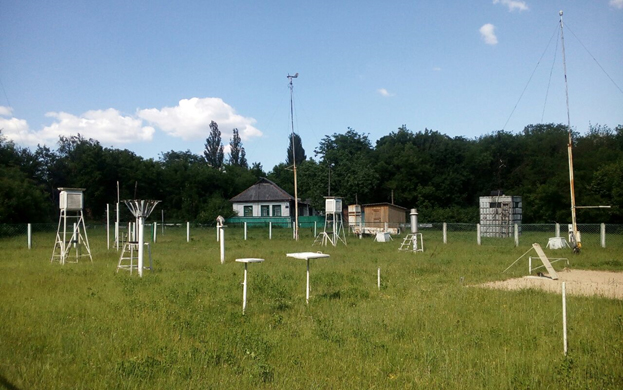
The first meteorological observations in Chornobyl were started in 1894, but were soon suspended and resumed in 1909 under the program of the meteorological post, and in 1925 a category II meteorological station was opened. Before the war, in addition to observations of the main meteorological elements, observations of the intensity of liquid precipitation and the duration of sunshine were conducted. The meteorological station constantly provided agricultural and meteorological information to local authorities and economic organizations of the city and district.
Since 1977, the Chornobyl meteorological station has been part of the network of observation stations and laboratory control over radioactive contamination of the environment (observations of the gamma background level were carried out using the DP-5 device). The meteorologists-observers have always conscientiously and responsibly performed their duties. When the technician on duty took measurements on that spring morning in April 1986, she could not believe her eyes. She repeated the measurements over and over again, but there was no mistake, the arrow was moving far to the right.
In this difficult situation, the meteorologists worked accurately, and storm telegrams were sent to Kyiv in accordance with the instructions.
Despite the high level of radioactive contamination, the observers ensured the operation of the weather station from April 26 to May 5, 1986.
From May 5, 1986 to May 1, 1988, the Chornobyl meteorological station was temporarily closed, but observations were provided on a shift basis by the entire Hydrometeorological Service of Ukraine.
During this period, meteorological observations were carried out according to a reduced program, and radiometric observations were carried out at 3 points. Observations were carried out by the operational group that provided hydrometeorological information to a number of facilities, organizations and institutions of the Chornobyl zone, including the State Commission for Elimination of the Chornobyl Accident Consequences, aviation involved in the elimination of these consequences, and the relevant headquarters of the Hydrometeorological Service of Ukraine.
On May 1, 1988, the station resumed full operation, and the staff headed by Kordyk Z. F. was restored.
In addition to round-the-clock meteorological observations (wind direction and speed, atmospheric pressure, air temperature and humidity, soil temperature, precipitation, cloud cover, visibility, atmospheric phenomena), the station conducts radiometric observations of gamma background using DRG-01T, air pollution (using a filter and ventilation unit) and radioactive contamination of precipitation (using a tablet). The station's employees also conduct hydrological observations on the Pripyat River, where the hydrological post is located.